Posted on

Dom Pérignon Vintage Rose 2004

Dom Perignon Rose Vintage 2004


The full bodied ease of the 2004 vintage will leave its mark on the history of Dom Pérignon. In stark contrast to the previous year, the vines experienced steady, problem free growth during spring with abundant, sizable grape clusters. There were no extreme weather events throughout the season with even August being rather cool. It was the dry heat of the final weeks that made the vintage what it was. The harvest of a mature, healthy crop began on 24 September.

The nose sings out loud and clear with fresh, intense red fruit, red currants and wild strawberries, complemented by warm notes of ripe hay, blood orange and cocoa. On the palate, it is smooth and embracing, but it is the impression of precision that dominates in the end. The wine is intense and penetrating with great length prolonged by the unexpected hing of green citrus that marks the vintage.

Posted on

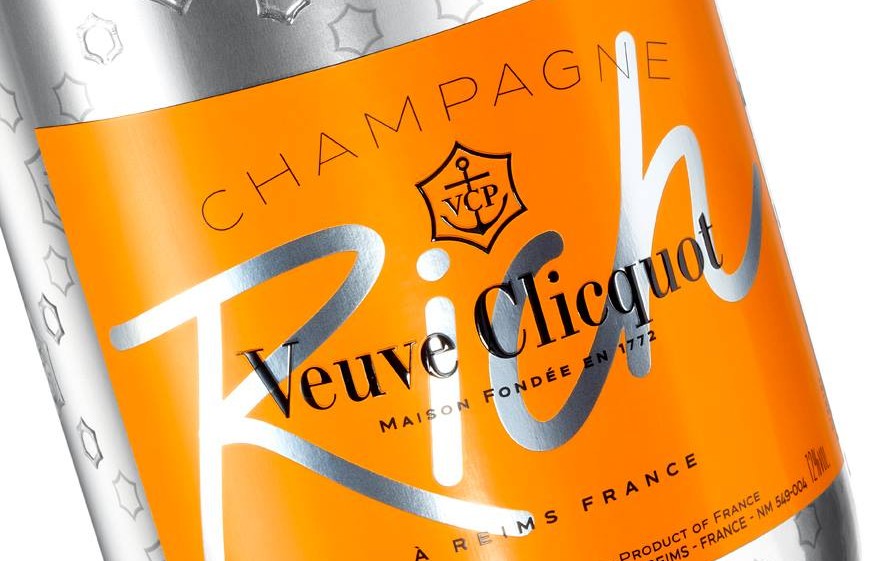
Champagne with the Veuve Clicquot twist.

They call it Clicquology.

Veuve Clicquot have brought a cocktail spirit to a Champagne House already known for audacity and innovation, Veuve Clicquot RICH is a new champagne dedicated to mixology. RICH invites you to experiment according to your own tastes and customize your champagne.

In the history of Champagne, wines that were blended for greater sweetness were customarily described as “rich”. Even the 1840s bottles of Veuve Clicquot found recently in the Aland Islands have over 150 grams per litre of sugar. Today Veuve Clicquot propels this tradition into the contemporary era with RICH, a champagne dedicated to mixology.

Veuve Clicquot RICH was created expressly to be combined with a selection of ingredients allowing the signature notes of the wine to be magnified by the presence of these ingredients: pineapple, grapefruit zest, cucumber, celery, peppers or tea, all on the rocks.

So what is the perfect serve? It is simple, and Veuve Clicquot have some great short videos to demonstrate Clicquology.

Clicquology: The Perfect Serve

1) Place ice cubes in a large wine glass
2) Add one of the recommended ingredients
3) Finish with chilled Veuve Clicquot Rich

Veuve Clicquot Rich and Celery


Veuve Clicquot Rich and Cucumber


Veuve Clicquot Rich and Pineapple


Veuve Clicquot Rich and Grapefruit


Veuve Clicquot Rich and Pepper


Veuve Clicquot Rich and Tea


Veuve Clicquot Rich is not currently available in Australia, so you will have to head to the bars and clubs of London, Paris and New York for the time being.

Posted on

Mum is worth it! Dom Pérignon Rosé Vintage 2003

Dom Perignon Rose Champagne 2003

Birthdays, New Year, anniversaries, Champagne is what we think of for many a festive occasion. And there has been a remarkable increase in the number of us choosing rosé Champagne as the ultimate expression in bubbly, especially in connection with such events as Valentine’s Day and Mother’s Day.

Dom Perignon Rose Champagne 2003

Rosé Champagne’s rise appears to have benefited from the boost in popularity of rosé still wines that have seen a significant improvement in quality. In the past, most winemakers set out to make red wine and then later decided to turn a portion of the juice pressed for red wine into rosé. Now, more often than not, winemakers are choosing to make rosé from the outset and are specifically focusing on producing rosé rather than simply using it as an outlet for unused juice. As winemakers have started making rosé with intention, the quality of the wine has naturally improved.

As well as quality, rosé has been embraced because it can easily be paired with a variety of foods. Rosé’s bracing acidity, lack of oak aging, and moderate alcohol are all very food-friendly traits. Acidity mirrors the tangy and pungent ingredients of spring and summer while also highlighting their fresh flavors. Moderate alcoholic strength means that it does not exacerbate spice or salt, or overpower food. Rosé has white wine structure and red wine flavors, so it can be as light or intense as necessary depending on the food it is paired with.

So what about celebrating Mother’s Day with Dom Pérignon Rosé Vintage 2003?

Richard Geoffroy, Creator and Chef de Cave of Dom Pérignon since 1990, describes the 2003 as being the one of the most memorable ever.

Indeed, 2003 was a year of all superlatives, a year of extremes, the warmest vintage in 53 years and one of the earliest harvests ever. Richard Geoffrey explains the Dom Pérignon Rosé Vintage 2003 as a wine of all paradoxes: voluptuous and hedonistic yet possessing an almost theatrical depth; incredibly intense yet exhibiting a silky and fleshy texture. The vintage of a perfectly ripe and healthy small harvest, is thus the most precocious since 1822.

As such, Dom Pérignon Rosé Vintage 2003 is the Dark jewel of Dom Pérignon, an ode to Pinot Noir: witty, vibrant, singing, dancing.

The colour is deep, with light amber and copper tints. The nose incites a burst of richness and complexity. Ripe fruit at first, then fig and strawberry as the wine breathes and grows, revealing guava, violet and vanilla.

The palate is concentrated and remarkably well-defined. The fullness is structured, rich. The silky, spicy material very gradually disappears into a mineral, iodine, salty finish.

Posted on

The Rosé Paradox – Dom Pérignon Rosé Vintage 2003

Dom Perignon Rose Paradox

In March 2014, Richard Geoffroy, Creator and Chef de Cave of Dom Pérignon since 1990, wanted to honour the Dom Pérignon Rosé Vintage 2003. He invited nine chefs from all over the world, each at the top of their craft, to celebrate the Dom Pérignon Rosé Paradox.

The challenge ahead was perfectly encapsulated by Chef David Deshaies of Michel Richard Citronelle – Washington, DC. “Dom Pérignon Rosé Vintage 2003 is unusual, you have to open your mind with this kind of wine. You can go in every direction, it is all about being creative in texture, in provocation.”

Dom Perignon Rose Champagne 2003

Indeed, 2003 was a year of all superlatives, a year of extremes, the warmest vintage in 53 years and one of the earliest harvests ever. Richard Geoffrey explains the Dom Pérignon Rosé Vintage 2003 as a wine of all paradoxes: voluptuous and hedonistic yet possessing an almost theatrical depth; incredibly intense yet exhibiting a silky and fleshy texture.

As such, Dom Pérignon Rosé Vintage 2003 is the Dark jewel of Dom Pérignon, an ode to Pinot Noir: witty, vibrant, singing, dancing.

The 3 days of “creative combustion” in Hautvillers and Paris lead to the creation of a unique 11-course menu, each chef contributing his own vision and sensitivity.

Dom Perignon Rose Paradox

— The Dom Pérignon Rosé Paradox Menu —

Salmon, rabbit and “hazelnut” butter salad – Matteo Baronetto (Del Cambio, Italy)

Pike quenelles with black truffle, lobster sauce – Laurent André (Royal Monceau, France)

Oyster with Galangal orchata – Ricard Camarena (Ricard Camarena Restaurant, Spain)

Crispy pea Vichyssoise – Karim Lakhani (New York Palace Hotel, United States)

Duck breast onion carbonara, fig-cacao sauce – David Deshaies (Villard Michel Richard, United States)

Hamachi sashimi ceviche style, rhubard and scallop crisp – Oliver “Ollysan” Lange (Serpentine Gallery, United Kingdom)

Roasted brioche, pigeon breast and rhubarb – Nenad Mlinaveric (Park Hotel Vitznau, Switzerland)

Marinated wild sea bass topped with Oscietra cavar champagne jelly, pickled cauliflower and lemon confit – Renald Epié (Al Mahara, Dubai)

Lamb ribs with Oaxaca yellow mole – Ricardo Munoz Zurita (Azul Historico, Mexico)

The chefs created the final two dishes as a team:

Brie chesse cream with black truffle

Red fruits, beet infusion and pink pepper

Each chef served a selection of dishes in his own restaurant over the course of 2014, allowing their customers to discover the singularity of Dom Pérignon Rosé Vintage 2003 and the Rosé Paradox.

This story was originally published as Honoring Dom Pérignon Rosé Vintage 2003 by Richard Geoffroy

Posted on

Capturing the light of Champagne

Ruinart Chardonnay at Reims

Chardonnay is the very soul of Ruinart. The grape, mainly harvested from the Côte des Blancs and Montagne de Reims terroirs, with its fresh aromas, vivacity, purity and luminosity, is the essence of all Champagne Ruinart cuvées.

From the beginning, the firm has owned 15ha of Chardonnay at Sillery and Puisieulx on the eastern side of the Montagne de Reims. It is the Montagne crus that produce wines richer and rounder than those of the Grand Cru Côte des Blancs, which have mineral focus and elegance but are often leaner.

Chardonnay Montagne de Reims Champagne

The delicate, fragile Chardonnay will only display the full breadth of its aromatic richness after a slow maturation in the coolness of the chalk cellars. This is up to 3 years for non-vintage wines, and 9 to 10 years for a Dom Ruinart. It is a test of the Cellar Master’s skill to produce a wine of brightness, intensity and elegance: combining these unique traits to develop what is known as the “Ruinart Taste”: an exclusive personality, truly in a class of its own.

Ruinart Blanc de Blancs is the signature of Ruinart. Made exclusively from chardonnay grapes, it is a beautifully luminous wine.

Ruinart Blanc de Blancs embodies purity of the Chardonnay grapes from which it is made exclusively. Made primarily with Premiers Crus from the Côte des Blancs and Montagne de Reims terroirs, it is intensely aromatic.

Ruinart Blanc de Blancs

The nose is powerfully reminiscent of fresh fruits with dominant notes of citrus and exotic fruits, followed by a touch of jasmine, white peaches and pink peppercorns.

The palate is both precise and clean as the wine delivers aradiant balance between roundness and smoothness.

Pale, golden-yellow colour with subtle green glints and wonderful luminosity with a persistent stream of fine and delicate bubbles. A nose of fresh fruits dominated by citrus fruit and pineapple mixed with notes of white flowers and spices (ginger and cardamom). A superb Blanc de Blancs with a clean, pure and well-defined palate. The attack is supple and full-bodied giving way to a superb, refreshing finish of white peach and citron notes.

On the nose, Ruinart Blanc de Blancs offers fresh fruits dominated by citrus fruit and pineapple mixed with notes of white flowers and spices (ginger and cardamom). On the palate, a superb Blanc de Blancs is revealed with a clean, pure and well-defined palate. The attack is supple and full-bodied.

Ruinart Blanc de Blancs reveals a refreshing finish of white peach and citron notes.

Panaiotis’ aim in this young blend is “to capture the light of Champagne”, the elegance and freshness of chardonnay. The wine articulates its philosophy vividly, driven by pure lemon fruit and delicate citrus blossoms. In younger disgorgements, there’s a wonderful hint of struck flint, harking to the reductive nature of the house. A beautifully fresh and electric style of stunning persistence and linearity, giving voice to the full and gentle minerality of the premier crus of the Cote des Blancs. 95 Points

Tyson Stelzer, The Champagne Guide 2014-2015

Ruinart Blanc de Blancs - The Light of Champagne

A very sociable wine, excellent for aperitifs on a sunny terrace on a summer afternoon. It is a wonderful accompaniment for langoustine or tartar of sea bream served with olive oil and lemon. Grilled sole or a white fish sashimi would also marry the wine perfectly.

 Download PDFDownload PDF

Posted on

What is Champagne?

Aprapart & Fils Mineral

Champagne wines are exclusively produced from grapes grown, harvested and made into wine within the Champagne delimited region, in France. The grapes used to make Champagne wines possess characteristics not found anywhere else in the world due to the particular geography, soil and climate of the Champagne delimited region.

Champagne wines are produced by natural yeast fermentation in the bottle, in accordance with strict criteria laid down in the Champagne regulatory framework covering every aspect of winemaking.

Principal rules:

Just three authorized grape varieties: Chardonnay, Pinot Noir, Pinot Meunier

Short pruned vines (Cordon de Royat, Chablis and Guyot pruning)

Capped grape yields per hectare

Juice extraction strictly limited to 102 litres of must per 160 kilos of grapes

Minimum annual required alcohol levels by volume

Dedicated Champagne wine-making and storage premises

A natural winemaking process known as the ‘Méthode Champenoise’

A minimum 15 months storage period for bottled wines prior to shipping