Posted on

Best Value Winery

Larry Cherubino Best Value Winery

LARRY CHERUBINO WINES SHINE AT THE 2017 QANTAS EPIQURE HALLIDAY WINE COMPANION AWARDS

Halliday has spoken, and once again it’s excellent news for Western Australian wine, with Larry Cherubino Wines awarded Best Value Winery of the Year in the 2017 Qantas epiQure Halliday Wine Companion Awards. Recognised as one of the Australian wine industry’s highest honours, Halliday’s Best Value Winery award recognises producers whose portfolio confidently displays that most holy of unions – outstanding wines and great value for money.

Larry Cherubino | Best Value WineryThe 2017 guide features 35 wines from the Cherubino stable – 28 of which received the all-important ‘value’ rosette across Cherubino, Laissez Faire, The Yard, Pedestal and Ad Hoc. This is a superb endorsement of the drive for consistency that winemaker Larry Cherubino has made his mission. “To us, it’s part of what we represent, to make wines that people want to drink and in turn, keep them coming back” the winemaker says. “This award is great in demonstrating that what we are doing is not only valuable to our customers but also to the regions we grow and source our grapes from. This recognition drives me to keep pushing myself to grow better grapes and make the wines that we want to drink”.

After 25 years in the industry, Cherubino’s knack for achieving elegance and consistency across region, vintage and price point certainly isn’t going unnoticed. Having taken out Halliday’s Winery of the Year along with multiple awards and medals in recent years, this recent award reinforces the story of Cherubino. “Wine is constantly evolving. We are always learning and having to change and we will always work hard to make sure we continue to chase both quality and value’.

“First up, in 2011 [Cherubino’s] eponymous winery was honoured as Winery of the Year. Second, in 15 years he has traversed all the challenges and practices of the issues [of modern winemaking]. And he has done it in style.” – James Halliday, 2017 Halliday Wine Companion

2017 Best Value Winery – Larry Cherubino Wines34 wines by Larry Cherubino scored 90 points or above, with 28 wines receiving the value ‘Rosette’ from James Halliday.

2013 Cherubino Margaret River Cabernet Sauvignon  97 points
2015 Cherubino Great Southern Riesling  96 points
2015 Cherubino Porongurup Riesling  96 points
2015 Cherubino Pemberton Sauvignon Blanc  96 points
2015 Cherubino Margaret River Chardonnay  96 points
2014 Cherubino Frankland River Shiraz  96 points
2014 Cherubino Frankland River Cabernet Sauvignon  96 points
2014 Laissez Faire Porongurup Syrah  96 points
2014 Laissez Faire Porongurup Syrah Grenache  96 points
2015 Laissez Faire Porongurup Riesling  95 points
2015 The Yard Pemberton Channybearup Sauvignon Blanc  95 points
2015 Ad Hoc Margaret River Straw Man Sauvignon Blanc Semillon  95 points
2015 Pedestal Margaret River Semillon Sauvignon Blanc  95 points
2014 The Yard Frankland River Justin Shiraz  95 points
2014 Cherubino Margaret River Cabernet  95 points
2014 The Yard Frankland River Riversdale Cabernet Sauvignon  95 points
2015 Ad Hoc Great Southern Wallflower Riesling   94 points
2014 Laissez Faire Porongurup Chardonnay  94 points
2015 Pedestal Margaret River Chardonnay  94 points
2014 Pedestal Margaret River Chardonnay  94 points
2015 Laissez Faire Frankland River Fiano  94 points
2015 Laissez Faire Margaret River Field Blend  94 points
2014 Ad Hoc Frankland River Middle of Everywhere Shiraz  94 points
2014 The Yard Frankland River Acacia Shiraz  94 points
2014 The Yard Frankland River Riversdale Shiraz  94 points
2015 Ad Hoc Pemberton ‘Nitty Gritty’ Pinot Grigio  93 points
2014 Laissez Faire Frankland River Grenache  93 points
2014 Pedestal Margaret River Cabernet Merlot  93 points
2014 Ad Hoc Frankland River Avant Gardening Cabernet Malbec  93 points
2015 Ad Hoc Pemberton ‘Hen & Chicken’ Chardonnay  92 points
2015 LC Porongurup Sauvignon Blanc 91 points  91 points
2015 LC Pemberton Chardonnay 90 points  90 points
2014 Laissez Faire Porongurup Pinot Noir  90 points
2014 LC Margaret River Puzey Road Cabernet Sauvignon  90 points


Posted on

Dom Pérignon Vintage Rose 2004

Dom Perignon Rose Vintage 2004


The full bodied ease of the 2004 vintage will leave its mark on the history of Dom Pérignon. In stark contrast to the previous year, the vines experienced steady, problem free growth during spring with abundant, sizable grape clusters. There were no extreme weather events throughout the season with even August being rather cool. It was the dry heat of the final weeks that made the vintage what it was. The harvest of a mature, healthy crop began on 24 September.

The nose sings out loud and clear with fresh, intense red fruit, red currants and wild strawberries, complemented by warm notes of ripe hay, blood orange and cocoa. On the palate, it is smooth and embracing, but it is the impression of precision that dominates in the end. The wine is intense and penetrating with great length prolonged by the unexpected hing of green citrus that marks the vintage.

Posted on

Moët & Chandon Exclusive Gold Collection

Moët & Chandon Golden Collection

Continuing its longstanding support of international cinema, Moët & Chandon, last week auctioned its exclusive Moët & Chandon Golden Collection for the 22nd edition of the annual amfAR Gala, Cinema Against AIDS. Held during the 68th Cannes Film Festival in France, Moët & Chandon’s lustrous, handmade collection of special edition, Jeroboam-format Moët Impérial champagnes was auctioned for more than $75,000 with proceeds benefitting lifesaving AIDS research.

The star-studded amfAR Gala is one of the most eagerly anticipated events of the Cannes Film Festival, and is widely considered the Festival’s most exclusive gathering. Moët & Chandon, the official champagne of the amfAR Gala, hosted and toasted the cinema world’s most successful celebrities at the Hôtel du Cap-Eden-Roc, including Michelle Rodriguez who has hosted the exclusive Moët & Chandon table, Marion Cotillard, Diane Kruger, Jake Gyllenhaal, Adrian Brody and many others.

In the Moët & Chandon Golden Collection, the Champagne House gathers together three unique and glimmering, golden Jeroboam bottles of Moët Impérial for the very first time:

So Bubbly Jeroboam

The bottle is delicately adorned with gold-colored bubbles that evoke the champagne’s famed effervescence. Shared with the world as an exclusive first sneak peek, So Bubbly is a design that lovers of Moët & Chandon will be destined to glimpse again in the months to come! The glamorous bottle features the Maison’s famed seal from Epernay, France in solid 18-carat gold, representing the more than 270 years of winemaking savoir-faire behind each bottle of Moët & Chandon champagne. So Bubbly Jeroboam features the final luxurious touch of a gold-plated label and signature tie.

Sign Your Moët Jeroboam

This is a handcrafted reinterpretation of Moët & Chandon’s iconic Jeroboam champagne bottle. Gilded by hand with a gold-plated label. But the elegant touch that elevates this stylish special edition into a grand gesture to remember is a signature by the one and only Roger Federer, global icon and brand ambassador for the Maison.

Golden Dust Jeroboam

A majestic three-liter bottle of Moët Impérial champagne that shimmers with an exquisite golden finish. The limited edition bottle is inspired by the noble dust that gathers on the champagne bottles as they mature in Moët & Chandon’s cellars in Epernay, France. Chic, elegant and radiantly luxurious, Jeroboam Golden Dust embodies Moët & Chandon’s global reputation for elegance.

As a part of this exceptional auction, MoëtHennessy has invited the acquirer and his guest to share an exclusive experience in Paris, centered on savoir faire, excellence and the best of the MoëtHennessy Maisons. One of France’s most acclaimed chefs will design an unforgettable sur-mesure dinner around rare vintages from MoëtHennessy’s best French vineyards. This will be a very special occasion to discover exceptional Moët & Chandon Grand Vintages Collection, Château d’Yquem, Château Cheval Blanc, Hennessy and other exceptional wines and spirits.

They will also spend a day and a night in Château de Bagnolet in Cognac, the historical house of Richard Hennessy, for a tour of Hennessy’s cellars and an amazing tasting of vintage cognacs with a Master Blender.

Posted on

Champagne with the Veuve Clicquot twist.

They call it Clicquology.

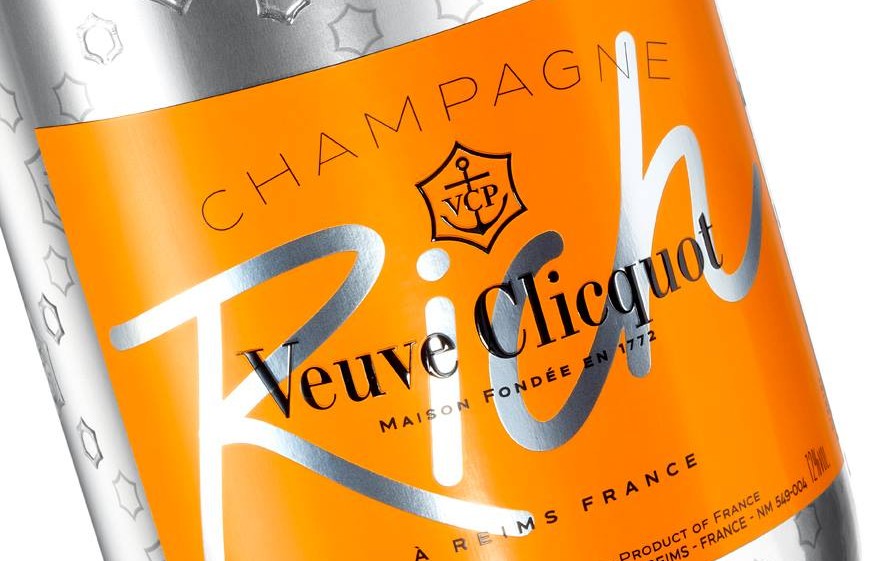
Veuve Clicquot have brought a cocktail spirit to a Champagne House already known for audacity and innovation, Veuve Clicquot RICH is a new champagne dedicated to mixology. RICH invites you to experiment according to your own tastes and customize your champagne.

In the history of Champagne, wines that were blended for greater sweetness were customarily described as “rich”. Even the 1840s bottles of Veuve Clicquot found recently in the Aland Islands have over 150 grams per litre of sugar. Today Veuve Clicquot propels this tradition into the contemporary era with RICH, a champagne dedicated to mixology.

Veuve Clicquot RICH was created expressly to be combined with a selection of ingredients allowing the signature notes of the wine to be magnified by the presence of these ingredients: pineapple, grapefruit zest, cucumber, celery, peppers or tea, all on the rocks.

So what is the perfect serve? It is simple, and Veuve Clicquot have some great short videos to demonstrate Clicquology.

Clicquology: The Perfect Serve

1) Place ice cubes in a large wine glass
2) Add one of the recommended ingredients
3) Finish with chilled Veuve Clicquot Rich

Veuve Clicquot Rich and Celery


Veuve Clicquot Rich and Cucumber


Veuve Clicquot Rich and Pineapple


Veuve Clicquot Rich and Grapefruit


Veuve Clicquot Rich and Pepper


Veuve Clicquot Rich and Tea


Veuve Clicquot Rich is not currently available in Australia, so you will have to head to the bars and clubs of London, Paris and New York for the time being.

Posted on

Mum is worth it! Dom Pérignon Rosé Vintage 2003

Dom Perignon Rose Champagne 2003

Birthdays, New Year, anniversaries, Champagne is what we think of for many a festive occasion. And there has been a remarkable increase in the number of us choosing rosé Champagne as the ultimate expression in bubbly, especially in connection with such events as Valentine’s Day and Mother’s Day.

Dom Perignon Rose Champagne 2003

Rosé Champagne’s rise appears to have benefited from the boost in popularity of rosé still wines that have seen a significant improvement in quality. In the past, most winemakers set out to make red wine and then later decided to turn a portion of the juice pressed for red wine into rosé. Now, more often than not, winemakers are choosing to make rosé from the outset and are specifically focusing on producing rosé rather than simply using it as an outlet for unused juice. As winemakers have started making rosé with intention, the quality of the wine has naturally improved.

As well as quality, rosé has been embraced because it can easily be paired with a variety of foods. Rosé’s bracing acidity, lack of oak aging, and moderate alcohol are all very food-friendly traits. Acidity mirrors the tangy and pungent ingredients of spring and summer while also highlighting their fresh flavors. Moderate alcoholic strength means that it does not exacerbate spice or salt, or overpower food. Rosé has white wine structure and red wine flavors, so it can be as light or intense as necessary depending on the food it is paired with.

So what about celebrating Mother’s Day with Dom Pérignon Rosé Vintage 2003?

Richard Geoffroy, Creator and Chef de Cave of Dom Pérignon since 1990, describes the 2003 as being the one of the most memorable ever.

Indeed, 2003 was a year of all superlatives, a year of extremes, the warmest vintage in 53 years and one of the earliest harvests ever. Richard Geoffrey explains the Dom Pérignon Rosé Vintage 2003 as a wine of all paradoxes: voluptuous and hedonistic yet possessing an almost theatrical depth; incredibly intense yet exhibiting a silky and fleshy texture. The vintage of a perfectly ripe and healthy small harvest, is thus the most precocious since 1822.

As such, Dom Pérignon Rosé Vintage 2003 is the Dark jewel of Dom Pérignon, an ode to Pinot Noir: witty, vibrant, singing, dancing.

The colour is deep, with light amber and copper tints. The nose incites a burst of richness and complexity. Ripe fruit at first, then fig and strawberry as the wine breathes and grows, revealing guava, violet and vanilla.

The palate is concentrated and remarkably well-defined. The fullness is structured, rich. The silky, spicy material very gradually disappears into a mineral, iodine, salty finish.

Posted on

The Rosé Paradox – Dom Pérignon Rosé Vintage 2003

Dom Perignon Rose Paradox

In March 2014, Richard Geoffroy, Creator and Chef de Cave of Dom Pérignon since 1990, wanted to honour the Dom Pérignon Rosé Vintage 2003. He invited nine chefs from all over the world, each at the top of their craft, to celebrate the Dom Pérignon Rosé Paradox.

The challenge ahead was perfectly encapsulated by Chef David Deshaies of Michel Richard Citronelle – Washington, DC. “Dom Pérignon Rosé Vintage 2003 is unusual, you have to open your mind with this kind of wine. You can go in every direction, it is all about being creative in texture, in provocation.”

Dom Perignon Rose Champagne 2003

Indeed, 2003 was a year of all superlatives, a year of extremes, the warmest vintage in 53 years and one of the earliest harvests ever. Richard Geoffrey explains the Dom Pérignon Rosé Vintage 2003 as a wine of all paradoxes: voluptuous and hedonistic yet possessing an almost theatrical depth; incredibly intense yet exhibiting a silky and fleshy texture.

As such, Dom Pérignon Rosé Vintage 2003 is the Dark jewel of Dom Pérignon, an ode to Pinot Noir: witty, vibrant, singing, dancing.

The 3 days of “creative combustion” in Hautvillers and Paris lead to the creation of a unique 11-course menu, each chef contributing his own vision and sensitivity.

Dom Perignon Rose Paradox

— The Dom Pérignon Rosé Paradox Menu —

Salmon, rabbit and “hazelnut” butter salad – Matteo Baronetto (Del Cambio, Italy)

Pike quenelles with black truffle, lobster sauce – Laurent André (Royal Monceau, France)

Oyster with Galangal orchata – Ricard Camarena (Ricard Camarena Restaurant, Spain)

Crispy pea Vichyssoise – Karim Lakhani (New York Palace Hotel, United States)

Duck breast onion carbonara, fig-cacao sauce – David Deshaies (Villard Michel Richard, United States)

Hamachi sashimi ceviche style, rhubard and scallop crisp – Oliver “Ollysan” Lange (Serpentine Gallery, United Kingdom)

Roasted brioche, pigeon breast and rhubarb – Nenad Mlinaveric (Park Hotel Vitznau, Switzerland)

Marinated wild sea bass topped with Oscietra cavar champagne jelly, pickled cauliflower and lemon confit – Renald Epié (Al Mahara, Dubai)

Lamb ribs with Oaxaca yellow mole – Ricardo Munoz Zurita (Azul Historico, Mexico)

The chefs created the final two dishes as a team:

Brie chesse cream with black truffle

Red fruits, beet infusion and pink pepper

Each chef served a selection of dishes in his own restaurant over the course of 2014, allowing their customers to discover the singularity of Dom Pérignon Rosé Vintage 2003 and the Rosé Paradox.

This story was originally published as Honoring Dom Pérignon Rosé Vintage 2003 by Richard Geoffroy

Posted on

Capturing the light of Champagne

Ruinart Chardonnay at Reims

Chardonnay is the very soul of Ruinart. The grape, mainly harvested from the Côte des Blancs and Montagne de Reims terroirs, with its fresh aromas, vivacity, purity and luminosity, is the essence of all Champagne Ruinart cuvées.

From the beginning, the firm has owned 15ha of Chardonnay at Sillery and Puisieulx on the eastern side of the Montagne de Reims. It is the Montagne crus that produce wines richer and rounder than those of the Grand Cru Côte des Blancs, which have mineral focus and elegance but are often leaner.

Chardonnay Montagne de Reims Champagne

The delicate, fragile Chardonnay will only display the full breadth of its aromatic richness after a slow maturation in the coolness of the chalk cellars. This is up to 3 years for non-vintage wines, and 9 to 10 years for a Dom Ruinart. It is a test of the Cellar Master’s skill to produce a wine of brightness, intensity and elegance: combining these unique traits to develop what is known as the “Ruinart Taste”: an exclusive personality, truly in a class of its own.

Ruinart Blanc de Blancs is the signature of Ruinart. Made exclusively from chardonnay grapes, it is a beautifully luminous wine.

Ruinart Blanc de Blancs embodies purity of the Chardonnay grapes from which it is made exclusively. Made primarily with Premiers Crus from the Côte des Blancs and Montagne de Reims terroirs, it is intensely aromatic.

Ruinart Blanc de Blancs

The nose is powerfully reminiscent of fresh fruits with dominant notes of citrus and exotic fruits, followed by a touch of jasmine, white peaches and pink peppercorns.

The palate is both precise and clean as the wine delivers aradiant balance between roundness and smoothness.

Pale, golden-yellow colour with subtle green glints and wonderful luminosity with a persistent stream of fine and delicate bubbles. A nose of fresh fruits dominated by citrus fruit and pineapple mixed with notes of white flowers and spices (ginger and cardamom). A superb Blanc de Blancs with a clean, pure and well-defined palate. The attack is supple and full-bodied giving way to a superb, refreshing finish of white peach and citron notes.

On the nose, Ruinart Blanc de Blancs offers fresh fruits dominated by citrus fruit and pineapple mixed with notes of white flowers and spices (ginger and cardamom). On the palate, a superb Blanc de Blancs is revealed with a clean, pure and well-defined palate. The attack is supple and full-bodied.

Ruinart Blanc de Blancs reveals a refreshing finish of white peach and citron notes.

Panaiotis’ aim in this young blend is “to capture the light of Champagne”, the elegance and freshness of chardonnay. The wine articulates its philosophy vividly, driven by pure lemon fruit and delicate citrus blossoms. In younger disgorgements, there’s a wonderful hint of struck flint, harking to the reductive nature of the house. A beautifully fresh and electric style of stunning persistence and linearity, giving voice to the full and gentle minerality of the premier crus of the Cote des Blancs. 95 Points

Tyson Stelzer, The Champagne Guide 2014-2015

Ruinart Blanc de Blancs - The Light of Champagne

A very sociable wine, excellent for aperitifs on a sunny terrace on a summer afternoon. It is a wonderful accompaniment for langoustine or tartar of sea bream served with olive oil and lemon. Grilled sole or a white fish sashimi would also marry the wine perfectly.

 Download PDFDownload PDF

Posted on

10 Ways to Drink Champagne Like an Expert

Elise Losfelt of Moët & Chandon.

Moet & Chandon Brut Imperial

1. The glass

The best way to enjoy champagne is in a white wine glass. A white wine glass’s larger bowl enables the wine to open up in the glass, allowing you to better enjoy all the aromas and to savor the complexity of the champagne. Traditional champagne flutes are perfect for showcasing champagne’s stream of bubbles, but their narrow shape limits the drinker’s experience of aromas and flavors. Coupe glasses, on the other hand, create the opposite experience; the glass’s extra-wide mouth amply exposes the champagne to the air allowing the bubbles and aromas to escape quickly.

2. Best way to open

When opening your bottle of Moët & Chandon, make sure you keep the cage on! The cage helps you control the cork so it doesn’t fly out when it pops, and also gives you leverage to help separate the cork from the bottle. When removing the cork, hold the top of the cage with your thumb to keep the cork in place and untwist the wire six times. Then hold the cage and cork together in one hand while using the other to twist the bottle’s base in a circular direction away from the cork to slowly work the cork out. Twisting the bottle instead of the cork allows you to more gently remove the cork and have more control.

3. Where to store

A common misconception when storing champagne is to leave it in the fridge. If you’re planning to enjoy your bottle of champagne immediately (within 3 or 4 days after buying it) storing it in the refrigerator is fine. But if it sits there for weeks the cork can dry out as there is no humidity in refrigerators. As corks dry out, the seal between the bottle and the cork loosen up and the champagne will oxidize faster, changing its aromas. Instead, keep it in a cool place in your home, away from any light, and where the temperature is consistent.

4. The ideal temperature

Once you’re ready to enjoy your champagne, the best way to chill your bottle is to fill an ice bucket with ice and one-third water and allow your bottle to cool for 15-20 minutes. Moët & Chandon should be served around 50⁰ F.

5. Pouring

When pouring champagne, only fill your glass about one-third of the way full. If you over-pour, it will warm up too quickly!

6. Hold the stem!

Also, remember to hold your glass by the stem and not by the bowl because your hands will warm the champagne up too quickly. And, holding the glass by the stem will make you look oh so elegant!

7. The stopper

In between pours, don’t forget to use a good champagne stopper to preserve all the delicious bubbles! A stopper will keep your open bottle fresh for about 1 day, in case you don’t finish in one sitting.

8. Drink champagne with your dinner!

Enjoy champagne throughout an entire meal! Many people think they should only enjoy Champagne as an aperitif but that it is not the only way to drink it. Champagne pairs beautifully with foods like fish, meat, grilled vegetables, and risotto, and can bring out new flavors you’ve never tasted in these foods!

9. Best foods to pair with bubbly

Also, don’t be afraid to experiment with food pairings. Oysters and caviar are fantastic with champagne, and more casual foods like truffle fries, fried chicken and cheese are equally delicious with Champagne! Champagne loves oily, salty and fatty foods as they bring out the wine’s fruitiness and freshness, so foods like burgers, tacos, BBQ sauce, and lobster are exciting new pairings to try that champagne connoisseurs have been enjoying for years!

10. Celebrate every day

If you have a bottle of champagne in your refrigerator, don’t wait for a special occasion to enjoy it. You will see that by opening that bottle, the special occasion will come to you. Celebrate life every day!

The original post appeared on Town & Country.

All photos courtesy of Moët & Chandon

Posted on

Krug Grande Cuvée Food Pairing

Krug Grande Cuvee and Truffle

The ultimate pleasure experience in Champagne. The first prestige cuvee to be re-created every year, beyond the very notion of vintage.

Krug Grande Cuvée is the quintessence of Krug’s crafted excellence: an extraordinary blend of some 120 wines from ten different vintages, some of which may reach 15 years of age. Blending so many vintages gives Krug Grande Cuvée its unique fullness of flavours and aromas, an extraordinary generosity with exceptional finesse, the result of a stay of at least another six years in the cellars.

Every glass of Krug Grande Cuvée is the fruit of many years of craft and patience. The art of blending many years gives Krug Grande Cuvée its unique plethora of flavours and aromas, incredible generosity and an absolute elegance that would be impossible to express with the wines of a single year.

Every year, we recreate from scratch the multitude of facets that form perfect harmony on the palate, no flavour dominating or competing with another; this is the main characteristic of Krug Grande Cuvée. Its myriad aromas make Krug Grande Cuvée the richest of them all. Its true generosity means that everyone can find something in it that stirs their emotions.

Eric Lebel, Chef de Caves, Krug

Food and Wine Pairing Inspirations

Krug Grande Cuvée lends itself to a plethora of culinary combinations, from the simplest to the most sophisticated, from an extra mature parmesan to a dish of “turbot à la truffe”.

Krug Grande Cuvee and Truffle

Over twenty years go into creating each bottle of Krug Grande Cuvée, to pair it with black truffle is to create a union of the best of nature’s offering. Simply the smell of fresh, delicate truffle is enough to evoke the fresh scents of autumn fruit in Krug Grande Cuvée; they combine in anyway no matter how simple, the experience is unforgettable.

Krug Grande Cuvee and Chestnuts

As the nights draw in, the evocative warmth of toasted chestnuts is irresistible. Smokey, crunchy and yet soft, chestnuts enhance the wines which compose Krug Grande Cuvée which can reach up to 15 years of age. A simple association, together they achieve sublime refined elegance.

Krug Grande Cuvée Tasting Notes

Deep golden colour and fine, vivacious bubbles, predicting fullness and elegance. Aromas of flowers in bloom, ripe & dried fruit, marzipan, gingerbread and citrus fruits. Flavours of hazelnut, nougat, barley sugar, jellied and citrus fruits, almonds, brioche and honey.

The richness of your Krug Champagne is fully revealed between 9°C and 12°C (49°F – 54°F). Serving your bottle too cold would refrain the aromas’expression.

Your Champagne should be stored in a wine cellar, or in a cool (between 10 to 15 °C – 50 to 59 °F) dry and away from light place, the exact conditions of Krug cellars.

Buy Krug Grande Cuvée

Download PDF

Posted on

What is Champagne?

Aprapart & Fils Mineral

Champagne wines are exclusively produced from grapes grown, harvested and made into wine within the Champagne delimited region, in France. The grapes used to make Champagne wines possess characteristics not found anywhere else in the world due to the particular geography, soil and climate of the Champagne delimited region.

Champagne wines are produced by natural yeast fermentation in the bottle, in accordance with strict criteria laid down in the Champagne regulatory framework covering every aspect of winemaking.

Principal rules:

Just three authorized grape varieties: Chardonnay, Pinot Noir, Pinot Meunier

Short pruned vines (Cordon de Royat, Chablis and Guyot pruning)

Capped grape yields per hectare

Juice extraction strictly limited to 102 litres of must per 160 kilos of grapes

Minimum annual required alcohol levels by volume

Dedicated Champagne wine-making and storage premises

A natural winemaking process known as the ‘Méthode Champenoise’

A minimum 15 months storage period for bottled wines prior to shipping